Building a resilient automation engine with Rust
How we scaled our core processing logic to handle millions of tasks per second without breaking a sweat.


Automation is easy when it’s just one thing happening once. It gets exponentially harder when you’re managing thousands of concurrent stateful agents across a distributed environment. At Olsa, we realized early on that our legacy Node.js execution engine was hitting the ceiling.
We needed something that gave us bare-metal performance with high-level safety guarantees. Enter Rust.
The challenge: state vs scale
Our engine doesn’t just trigger APIs. It maintains long-running state for complex workflows that might wait for human approval for 72 hours or retry a flaky endpoint for 10 minutes.
- Memory safety without a garbage collector
- Fearless concurrency for agent execution
- Small binary footprint for edge deployment
- Strong typing to prevent runtime workflow failures
Architecture overview
“We didn’t just want a faster engine. We wanted an engine that would tell us it was going to fail before we even compiled the first line of code.”
The new engine is a single scheduler binary in front of a sharded state store. Workflows compile to state machines; every await point is a durable checkpoint, so a crashed node resumes exactly where it left off instead of replaying side effects.
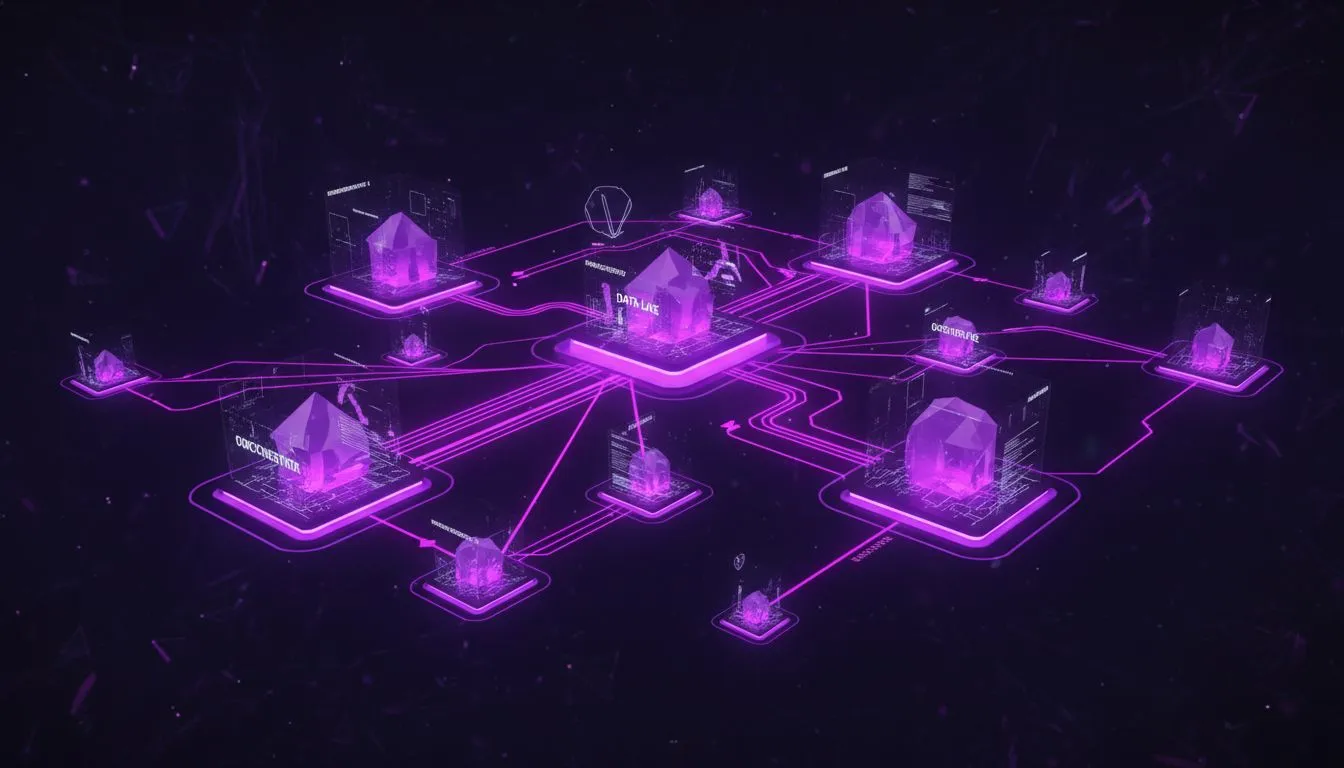
Olsa’s new event-loop architecture built on Tokio.
Implementation: the Tokio loop
By leveraging the Tokio runtime, we were able to build a multi-threaded scheduler that handles agent context-switching with near-zero overhead. Here’s a simplified look at how we handle asynchronous agent polling:
#[tokio::main]
async fn main() -> Result<(), Box<dyn Error>> {
    let mut scheduler = WorkflowScheduler::new();

    // Spawn 1,000,000 agents
    for id in 0..1_000_000 {
        tokio::spawn(async move {
            run_agent(id).await;
        });
    }

    Ok(())
}
Performance results
The rewrite took our p99 task latency from 180ms to 9ms and cut the fleet’s memory footprint by two thirds. More importantly, an entire class of production incident — the stuck workflow that silently drops state — became unrepresentable.
What’s next
We’re extending the same state-machine compiler to run agents at the edge, closer to the tools they orchestrate. If making distributed systems boring sounds like fun, we’re hiring.
Related Articles
View all posts




Stop doing what software should.
Join the teams letting Olsa handle the repetitive work — so they can focus on the work that matters.